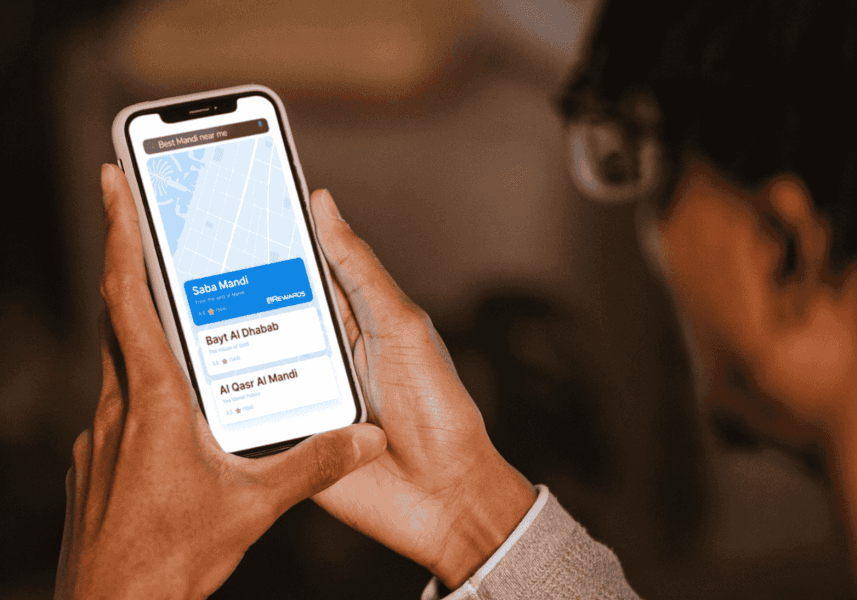
How Google Maps Decides Which Restaurants and Hotels Show Up First
For most restaurants and hospitality venues, visibility on Google Maps determines whether a guest ever walks through the door.
When someone searches for a place to eat, drink, or stay, Google Maps presents a short list of options. These results feel simple on the surface, but the logic behind them is not random. Restaurants and hotels that consistently appear at the top tend to share common patterns — even if their menus, pricing, or locations are similar to competitors nearby.
Understanding how Google Maps evaluates hospitality businesses helps explain why some venues struggle with visibility despite good service, while others attract steady discovery without paid ads.
Why Google Maps visibility matters more than websites
In hospitality, discovery rarely starts on a website.
Guests usually begin with Google Maps. They search by location, cuisine, or intent. They scroll quickly, compare ratings, glance at recent reviews, and choose based on what feels trustworthy and relevant in that moment.
For restaurants and hotels, this means Google Maps often matters more than:
-
A polished website
-
Social media presence
-
Occasional promotions
Visibility on Maps is not just about being listed. It’s about where you appear and how confident a guest feels choosing you.
The three pillars Google Maps uses to rank hospitality venues
Google publicly refers to three main factors when ranking local results: relevance, distance, and prominence. In hospitality, prominence is usually the deciding factor — and reviews play a central role in it.
While Google does not publish exact formulas, patterns across restaurants, cafés, and hotels are consistent.
1. Review frequency (not just total reviews)
Many businesses focus on how many reviews they have overall. In reality, Google Maps pays close attention to how often reviews are added.
A venue with steady, ongoing reviews often performs better than one with a high total count but long gaps between activity.
From Google’s perspective, frequent reviews signal:
-
Active customer engagement
-
Ongoing relevance
-
A business that is still operating at a high standard
This is why review timing matters so much. Visibility depends not just on collecting reviews, but on collecting them consistently.
2. Recency and freshness
Recent reviews carry more weight than older ones.
When guests see feedback from the last few days or weeks, they trust it more. Google reflects this behavior by favoring venues with fresh activity.
For restaurants and hospitality venues, this creates a challenge. Guest experiences happen daily, but reviews often don’t. If reviews are requested too late or inconsistently, the online presence doesn’t match real-world performance.
3. Rating stability and credibility
Google evaluates patterns, not just numbers.
Sudden spikes in reviews, identical wording, or unusual timing can reduce credibility. On the other hand, natural language, varied feedback, and steady growth signal authenticity.
This is why genuine Google reviews, written naturally during real visits, perform better than forced or incentivized feedback.
Why Google Maps favors consistency over campaigns
Hospitality businesses often approach reviews as campaigns — pushing hard for a short period, then stopping.
From Google’s perspective, this creates an uneven signal. Visibility improves briefly, then fades.
Google Maps rewards:
-
Steady review flow
-
Natural guest participation
-
Long-term reliability
This aligns with how guests behave. Trust builds when feedback feels ongoing, not manufactured.
The role of guest behavior in Google Maps rankings
Google Maps doesn’t just analyze reviews in isolation. It also observes how users interact with listings.
Signals such as:
-
Click-throughs
-
Direction requests
-
Time spent viewing photos
-
Review reading behavior
All help Google understand which venues users find relevant and trustworthy.
Reviews collected during the guest experience often lead to stronger engagement signals because the guest is already interacting with the business while it’s top of mind.
Why post-visit reviews weaken Maps performance
Many restaurants and hotels request reviews after the visit or after checkout. While some guests respond, many don’t.
This creates gaps between experiences and feedback. From Google’s perspective, those gaps make the business appear less active, even if it’s busy every day.
When reviews are collected during the visit:
-
Feedback is more timely
-
Review frequency improves naturally
-
The online signal aligns with real-world activity
This is one reason why venues that integrate review collection into the guest experience often see more stable Maps visibility.
How hospitality environments differ from other local businesses
Restaurants, cafés, hotels, and lounges are experience-based. Guests spend time on-site, form opinions during the visit, and are more emotionally connected while they are still present.
This makes hospitality uniquely suited for in-venue engagement, unlike services where interaction ends quickly.
Google Maps appears to reflect this reality. Hospitality listings with consistent, recent reviews tend to outperform similar venues relying on delayed follow-ups.
Common misconceptions about Google Maps rankings
“Location is everything.”
Distance matters, but it doesn’t override trust signals.
“More reviews always win.”
Frequency and recency matter more than raw volume.
“Once we rank well, we’ll stay there.”
Maps rankings are dynamic and change with activity.
“Only ads influence Maps visibility.”
Organic signals still drive long-term performance.
What this means for restaurants and hospitality venues
Google Maps visibility is not about tricks or optimization hacks. It’s about aligning online signals with how guests actually behave.
For restaurants and hotels, this means:
-
Treating reviews as part of the guest experience
-
Focusing on consistency, not campaigns
-
Prioritizing timing over reminders
When review collection matches the moment of engagement, Google Maps receives a clearer, more reliable signal.
How this connects to the broader guest journey
As discussed in the previous article, collecting reviews during the visit removes friction and improves authenticity.
Understanding how Google Maps evaluates those reviews explains why timing makes such a difference. Visibility is not driven by volume alone, but by relevance, freshness, and trust over time.
In the next article, we’ll explore why post-visit follow-ups fail in hospitality, and what guest psychology reveals about attention, memory, and motivation after the experience ends.